Why waiting wasn’t an option for Irene and her twins
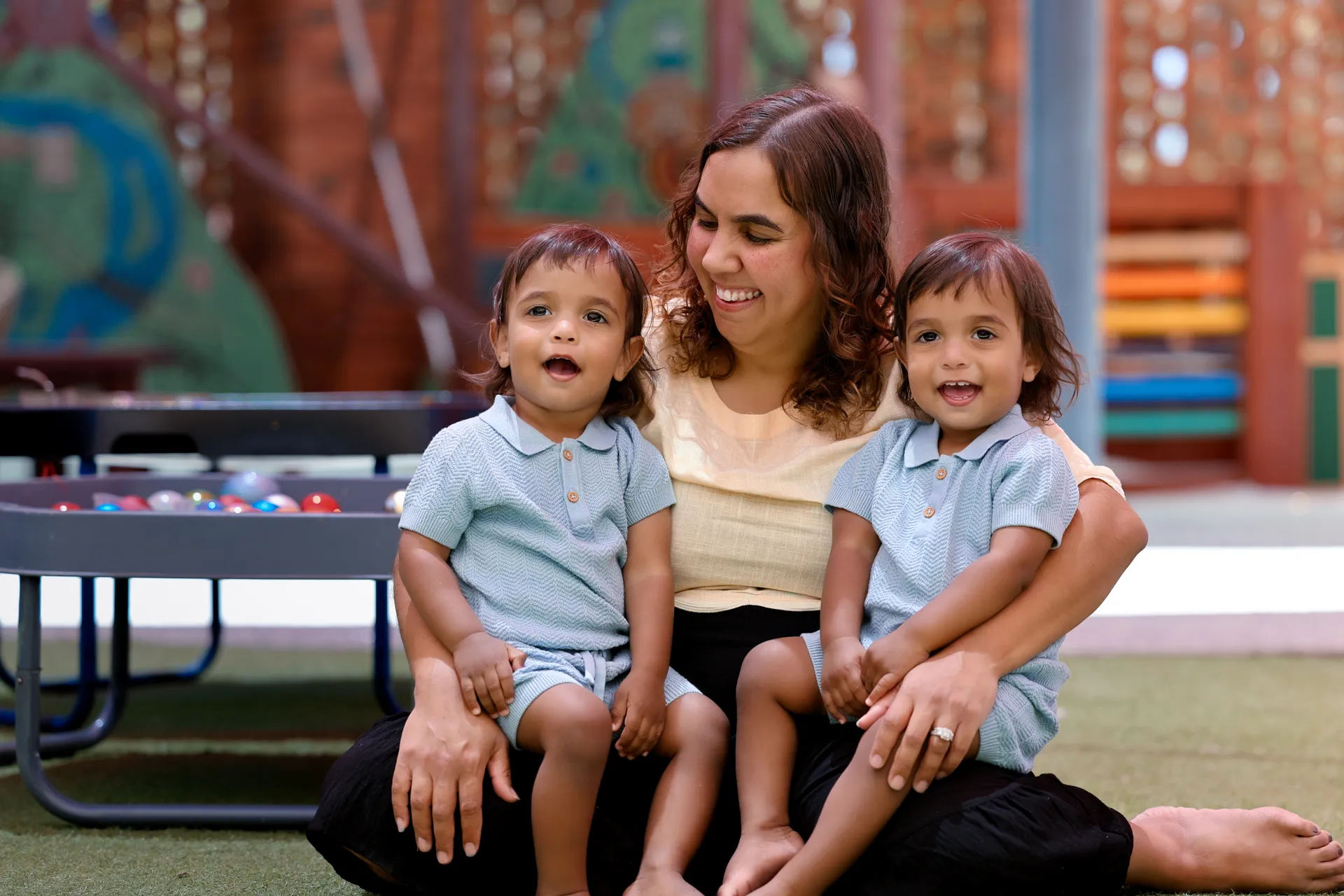
For proud Whadjuk, Ballardong and Wongi mum of five, Irene Hayden, early support isn’t just important it’s personal.
As a passionate advocate for Aboriginal families, Irene has spent years supporting parents of young children. But when it came to her own 16-month-old twins, Damon and Dalton, she knew that seeking support early could make all the difference.
______
"I have always been passionate about supporting Aboriginal families and helping our children grow strong and confident in who they are. I’ve worked in early childhood for almost 10 years, advocating for better outcomes and making sure our kids are ready for school.
But when it came to my own twins, Damon and Dalton, I knew I couldn’t just rely on what I already knew I had to act early.
I already have a child on the autism spectrum with ADHD, so I understand how important early intervention can be. I wanted to be proactive. If there were any developmental differences, I wanted to recognise them early and make sure I had the right tools to support my boys properly not sit on a waitlist and wonder.
That’s what led me to Inklings, an early developmental support program for families whose babies may be showing early differences in communication and social interaction.
I felt like the twins were still developing their expressive language and finding their own ways to communicate. When I signed us up for inklings the boys were 11 months old. They weren’t consistently using clear words yet, but they were communicating in so many other ways pointing, gesturing, making sounds and really trying to engage. I wanted to better understand how to support that next stage of their development.
Even with my background in early childhood, the program really challenged me in the best way.
I went into it thinking I already knew a lot and I do but Inklings made me slow down and reflect on my own parenting. It reminded me that even as professionals, we’re still mums first, and there’s always room to grow.
The biggest shift for me was being intentional about one-on-one time with each twin. Spending that individual time helped me truly see how each of them learns, processes and communicates in his own way. It strengthened our bond in a way I didn’t expect.
Understanding emotions and regulation was another powerful takeaway. I became more conscious about acknowledging their feelings and modelling language around emotions, even as they continue building their vocabulary. Supporting them to regulate has made a big difference in our home.
It’s brought us closer. I really value that connection time.
The support I received through Ability WA was also incredible. My speech therapist made me feel safe, heard and supported. As a busy working mum of five, flexibility is everything being able to text, reschedule and know I was understood made such a difference.
The impact hasn’t just been on me it’s strengthened our whole family.
My husband has been amazing through this journey. He’s always been such a strong and loving father, but I’ve seen him step even more intentionally into connecting with the twins. When I sing to them, he sings too. He reads to them, he celebrates their progress, and the boys absolutely light up with him.
Watching him grow alongside them has been really special. It’s made our family unit even stronger.
For other Aboriginal and Torres Strait Islander families thinking about Inklings, my message is simple don’t wait. The program better supports you as a parent to better support your child’s development.
It’s a free service and you receive one-on-one support from professionals who genuinely want to help you understand your child’s development. Early support isn’t about labelling it’s about empowering you as a parent.
In my work with Aboriginal families every day, I see how powerful early support can be. And as a mum, I’ve lived it.
Early support matters. It sets our children up for life and strengthens our families along the way."
First published Wednesday 25 March 2026
View all news articles