
New research reveals how the Inklings Program evolved to support more families
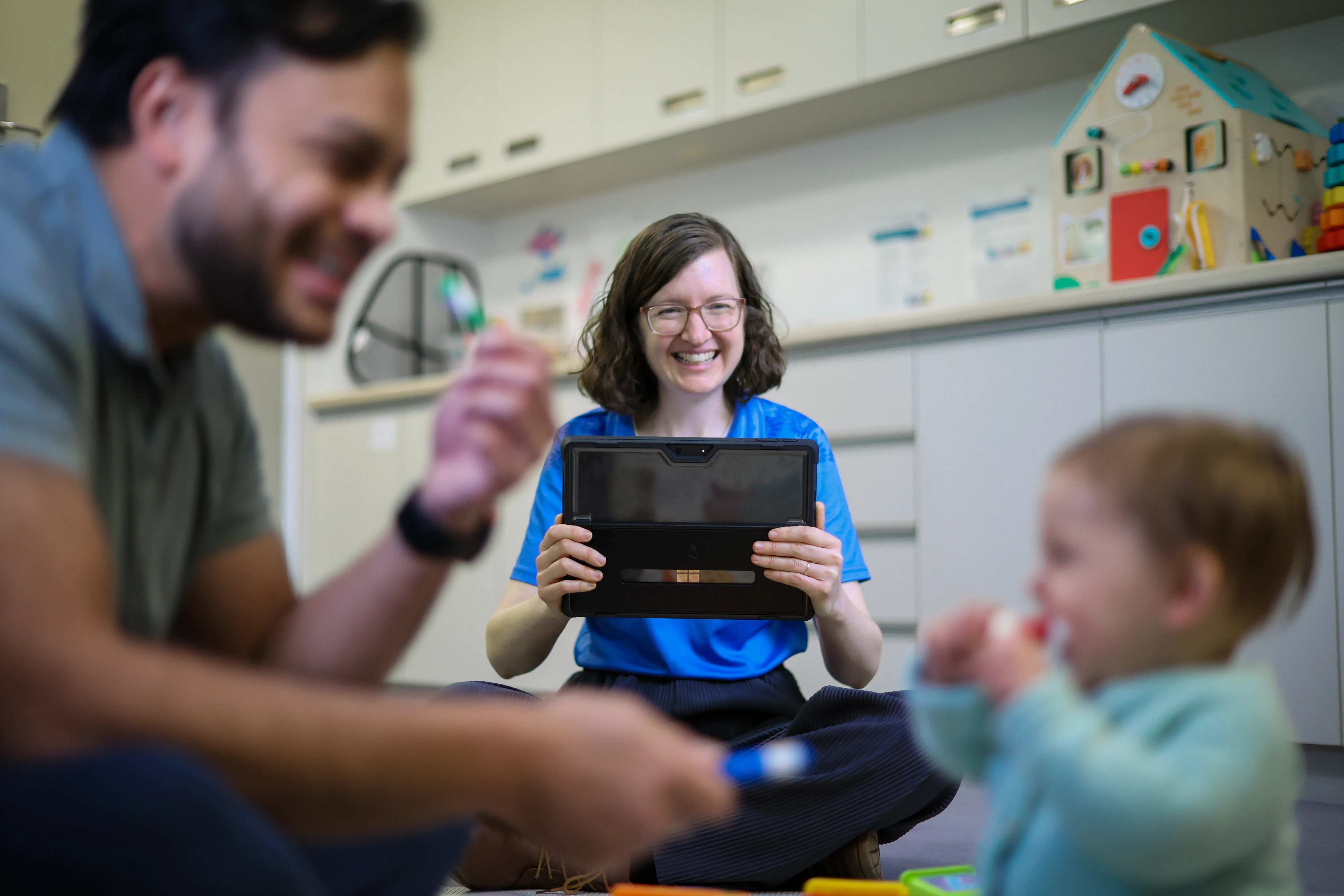
New research from The Kids Research Institute Australia has revealed how the Inklings Program evolved from a clinical trial into an evidence-based early support program designed for delivery in real-world health services.
Published in Global Implementation Research and Applications, the study examined how the program was modified as it moved from research into practice, identifying 76 changes across four versions of the program manual and practitioner training materials developed between 2016 and 2025.
Lead author Dr Rhylee Sulek said understanding how evidence-based programs evolve was critical to successful implementation.
“Moving a program from a research trial into community delivery requires thoughtful modification,” Dr Sulek said.
“We wanted to understand what changed, why those changes were made, and whether the core elements of the Program remained intact as the program expanded to support more families.”
Developed through more than a decade of research, the Inklings Program supports caregivers to recognise and respond to their baby’s unique communication style, helping strengthen early social communication development.
Researchers used the Framework for Reporting Adaptations and Modifications-Enhanced (FRAME) to map changes made during the transition to health service delivery.
Senior Research Fellow Dr Kandice Varcin said most changes related to program content (83 per cent), with modifications focused on improving accessibility, supporting different service settings and enabling consistent delivery by practitioners. Changes also included the introduction of telehealth delivery and a structured practitioner training pathway.
Despite these changes, researchers found the core purpose of the Inklings Program remained unchanged.
“While the way the Inklings Program is delivered has evolved, the foundation of the Program has remained the same,” Dr Varcin said.
“The focus continues to be on helping caregivers recognise their baby’s communication, follow their lead and build stronger connections through everyday interactions,” she said.
The study also highlighted how the Inklings Program has continued to align with contemporary approaches to early childhood support, including strengths-based and neurodiversity-affirming practices.
Inklings General Manager Gemma Upson said the findings demonstrate that careful modifications are essential to bringing research into communities.
“Evidence-based programs need to respond to the needs of families, practitioners and health systems if they are going to reach the communities who need them,” Ms Upson said.
Further research will continue to explore family experiences, implementation and outcomes as the Inklings Program expands across Australia.
Read the full publication here.
First published Tuesday 22 September 2026
View all news articles